Leave Your Message
0%

When global buyers are choosing a data center, it’s often tempting to just compare badges, prices, or the claimed uptime. But honestly, the right Data Center Tier has to match a bunch of factors — like your workload risks, recovery goals, location, and budget. You see, Uptime Institute’s Tier classifications talk about how resilient the infrastructure is, and TIA-942 offers another popular framework. They’re both useful tools, but don’t think of them as some sort of scorecard you can just check off. For example, a Tier III design means you can do maintenance at any time without shutting down key systems—that sounds straightforward, right? But in reality, things like how well maintenance is done, fuel planning, monitoring, and how quickly staff responds can all impact the actual outcome, sometimes in unexpected ways.

When experienced folks visit a site, they don’t just glance around. They dig into generator test records, check how the UPS pathways are set up, assess cooling systems, fire safety measures, and physical access controls. They’ll also ask questions like where your data really lives and how the provider reports incidents. Evidence really matters here. Providers should be able to back up claims like ISO 27001 or SOC 2 with up-to-date, verifiable docs. A trustworthy operator will also be open about their power efficiency, network diversity, any service exclusions, and their plans for growth. When comparing options, it's important to look beyond just uptime percentages; understanding failure scenarios gives you a clearer picture. Sometimes a lower-tier facility might handle a simple internal app just fine, but if you're dealing with ongoing payments, healthcare data, or global cloud services, you'd probably want something higher. Keep in mind, though, that just seeing a fancy certification doesn’t replace doing your own homework. A shiny brochure can hide unclear details—so approach with a critical eye. No data center is perfect, and that’s okay. This guide is here to help you interpret those Tier claims carefully and choose a resilience level that actually fits the business risks you’re facing.
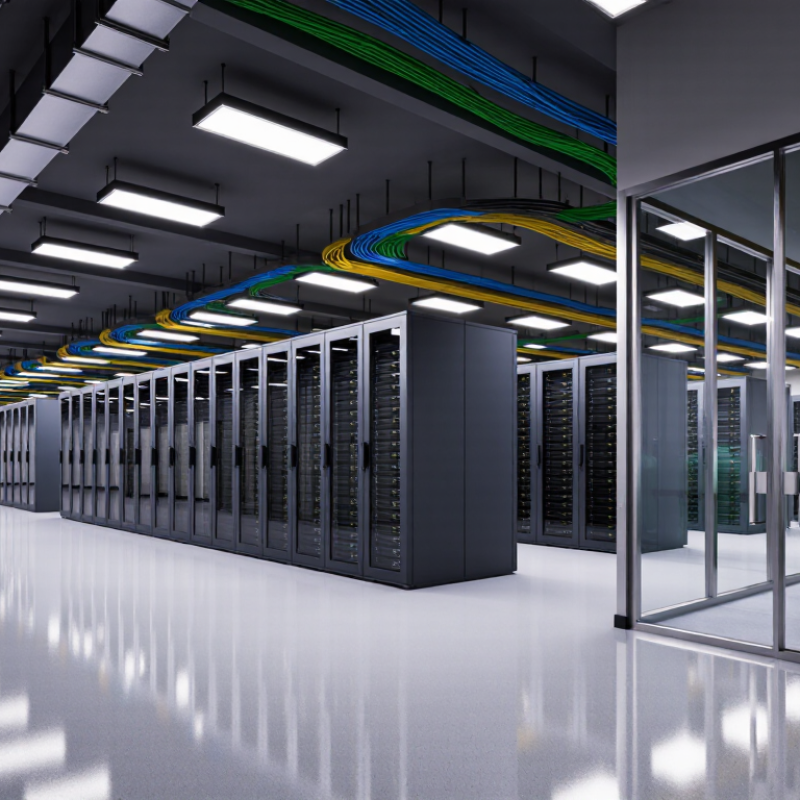
Top Data Center Tier for Global Buyers Explained

What Data Center Tier Ratings Mean

Data center tier ratings describe resilience, not prestige. The Uptime Institute Tier Standard defines Tier III as concurrently maintainable. Technicians can replace selected equipment without shutting down critical systems. Tier IV adds fault tolerance, so one unexpected failure should not interrupt operations. The commonly cited availability targets are 99.982% for Tier III and 99.995% for Tier IV. That difference equals roughly 95 minutes versus 26 minutes of annual downtime.

The numbers sound precise. Reality is less tidy. A tier rating does not measure every operational risk. Staffing, maintenance discipline, network diversity, fuel logistics, and fire protection still matter. The Uptime Institute Global Data Center Survey has repeatedly identified human error and power issues among major outage causes. Buyers should request maintenance records, incident histories, and testing evidence, not only certificates. A brightly lit facility can still have weak procedures.

Energy demand also changes the decision. The 2024 United States Data Center Energy Usage Report from Lawrence Berkeley National Laboratory estimated data centers used about 176 terawatt-hours in 2023. It projected consumption could reach 325 to 580 terawatt-hours by 2028. Cooling capacity and power availability now deserve the same attention as redundancy. For an Ecc Data Center evaluation, ask whether the stated tier applies to the whole site, a specific room, or only the electrical design. I would also question optimistic recovery claims. They often hide assumptions about staffing, spare parts, and local grid conditions.

How Tier Levels Are Classified

Top Data Center Tier for Global Buyers Explained

Data center tiers classify infrastructure resilience, not prestige. The common system runs from Tier I to Tier IV.

Tier I offers basic capacity and planned maintenance requires downtime.

Tier II adds some redundant components, such as spare cooling units or power modules.

Tier III supports concurrent maintainability. Technicians can replace selected equipment without stopping critical workloads.

Tier IV adds fault tolerance, with independent systems designed to withstand one serious failure.

These categories examine power paths, cooling, distribution, physical security, and operational procedures. They do not measure every cybersecurity or service-quality issue.

For a Big Data Center, Tier III often balances resilience and operating cost. It may support analytics, cloud workloads, and international applications with planned maintenance protection. Tier IV suits workloads where disruption creates severe operational consequences.

However, a higher tier is not automatically the wiser purchase. A facility may hold a strong classification but still suffer weak monitoring or poor incident planning. The label needs evidence.

Tips:

Ask for the exact tier scope and certification date. Check whether the rating covers the whole site or only selected rooms. Review maintenance records, generator testing, cooling performance, and recovery exercises. Walk past the polished server rows. Look at cable labeling, water controls, and access procedures. Small details reveal operational maturity. A buyer should also compare local power stability, network routes, climate risks, and staffing depth. Tier classifications are useful, but they are not a complete decision. Some assumptions will need challenging.

Key Differences Between Tier I, II, III, and IV

Top Data Center Tier for Global Buyers Explained

Tier I facilities use one power and cooling path, with limited backup capacity. They suit small workloads where short outages remain manageable. Tier II adds redundant components, such as spare cooling units and backup generators. However, maintenance may still require planned downtime. Tier I usually provides about 99.671% availability, while Tier II reaches roughly 99.741%. These figures sound close, yet they represent several additional hours of annual downtime.

Tier III data centers support concurrent maintenance. Staff can service a generator, switch, or cooling unit without shutting down critical equipment. Multiple distribution paths exist, although one path normally carries the load. This design fits banking, healthcare, and international operations needing stronger continuity. Tier IV goes further with fault-tolerant infrastructure. Its systems include independent power and cooling paths, plus backup capacity for unexpected failures. The target availability is about 99.995%, or roughly 26 minutes of annual downtime. Impressive, but not magical.

Physical details matter during evaluation. Check fuel storage, battery rooms, fire separation, access controls, and tested maintenance records. A high tier does not automatically guarantee excellent daily operations. Poor monitoring or weak procedures can reduce real-world resilience. This is where buyers should pause. Tier labels may simplify complex risks. A provider’s location, network diversity, recovery testing, and local regulations also deserve careful review.

Why Tier III and IV Suit Global Buyers

Tier III and Tier IV facilities suit global buyers because uptime affects customers, revenue, and international operations. Tier III supports concurrent maintainability, allowing technicians to replace equipment without shutting down critical systems. Tier IV adds fault tolerance, with independent systems designed to keep running after one failure. These features matter when applications serve several time zones.

A practical assessment should examine power paths, cooling, fire protection, security, and network diversity. Ask for independent certification, maintenance records, and recent test results. A Cdu Data Center may use cooling distribution units to control rack temperatures, but buyers should verify capacity under peak loads. On-site experience often reveals details that brochures miss, such as blocked airflow or difficult maintenance access. Tier IV costs more, and it may exceed the real needs of some workloads.

Tips: Compare the facility’s design with your recovery plan. Request evidence of generator testing and cooling performance. Check whether two network routes enter separate building areas. Review local regulations, data residency requirements, and emergency procedures before signing. Leave room for future power density. Small oversights become expensive. No design removes every risk. Some teams also overestimate Tier IV benefits when their software remains a single point of failure.

How Reliability and Redundancy Are Measured

Top Data Center Tier for Global Buyers Explained

How Reliability and Redundancy Are Measured

Data center tiers describe how infrastructure handles failures and maintenance. Tier III sites support concurrent maintenance without shutting down critical operations. Tier IV sites add fault tolerance, so one failure should not interrupt service. The difference matters during a power transfer, cooling fault, or equipment replacement. Reliability is measured through availability targets, incident records, maintenance procedures, and tested recovery times. A facility may advertise strong uptime, but evidence matters more than a polished specification.

Redundancy shows how many backup components exist. N means the exact capacity required for normal operations. N+1 adds one spare component, while 2N provides two independent capacity systems. Power paths, generators, cooling units, fuel systems, and network routes should be reviewed separately. In practice, a redundant design can still fail through one shared control panel or poorly managed switch. That detail is easy to miss. Operational discipline often decides whether engineering plans work during stress.

Tips: Ask for independent certification, recent test records, maintenance logs, and outage disclosures. Confirm whether redundancy covers the entire path, not only individual machines. Review local grid stability, flood exposure, fire protection, and physical access controls. Request proof of backup runtime under realistic loads. A spreadsheet may show perfect resilience, yet staff training can remain uneven. Buyers should question assumptions and compare measured performance with contractual commitments.

Factors for Comparing Data Center Tiers Worldwide

Top Data Center Tier for Global Buyers Explained

Comparing data center tiers worldwide requires more than reading a certification label. The Uptime Institute’s Tier Standard defines Tier III as concurrently maintainable, while Tier IV adds fault tolerance. This distinction affects maintenance, redundancy, and outage exposure. However, a higher tier does not guarantee perfect operations. Uptime Institute’s 2024 Global Data Center Survey reported that 54% of respondents placed their latest outage cost below $100,000, while 16% reported costs above $1 million. Operational discipline still matters.

Global buyers should compare power architecture, cooling design, maintenance windows, physical security, network diversity, and local disaster risks. A facility near a water-stressed region may need stronger cooling controls. A site in a seismic area needs different structural evidence. The IEA’s Electricity 2024 report estimated that data centers, cryptocurrency, and artificial intelligence used about 460 TWh globally in 2022. That demand could exceed 1,000 TWh by 2026. Energy efficiency and renewable-power access are now practical purchasing factors, not public-relations details.

Tips: Request independent certification, recent incident records, and maintenance procedures. Check whether the stated tier covers the whole site or only selected systems. Compare actual power-usage effectiveness, not just marketing claims. Ask for measured uptime over several years. This is where buyers often hesitate—and reasonably so. Tier labels simplify complex risk, sometimes too much.

Top Data Center Tier for Global Buyers Explained - Factors for Comparing Data Center Tiers Worldwide

A practical comparison of internationally recognized data center tier classifications for resilience, availability, maintenance, and workload suitability.

Comparison Factor Tier I Tier II Tier III Common Enterprise Choice Tier IV Highest Resilience
Design Objective Basic infrastructure for small-scale or non-critical IT operations. Improved protection for businesses requiring some redundancy. Concurrently maintainable infrastructure designed for continuous operations. Fault-tolerant infrastructure designed to withstand individual equipment or distribution failures.
Typical Availability Target 99.671% 99.741% 99.982% 99.995%
Approximate Maximum Annual Downtime 28.8 hours per year 22.0 hours per year 1.6 hours per year Approximately 26.3 minutes per year
Power Path Design Single power distribution path to IT equipment; limited backup capability. Single distribution path with redundant capacity components such as UPS modules or generators. Multiple distribution paths with at least one path available for maintenance; IT equipment generally uses one active path unless designed otherwise. Multiple active distribution paths with sufficient independence to tolerate a single failure without interrupting critical loads.
Cooling Infrastructure Basic cooling capacity with limited redundancy. Redundant cooling capacity components, but not necessarily redundant distribution paths. Cooling systems and distribution are arranged so that planned maintenance can occur without shutting down IT loads. Cooling systems are arranged to remain operational after a single equipment or distribution failure.
Maintenance Capability Planned maintenance may require a service interruption. Some maintenance can be performed without interruption, depending on the component and operating configuration. All critical capacity and distribution components can be removed or serviced without affecting IT operations. Maintenance, equipment failure, and selected operational errors can be handled without interrupting critical IT loads.
Fault Tolerance Low; a single infrastructure failure may interrupt service. Moderate; redundant capacity components reduce the effect of selected failures. High maintainability, but the design may not tolerate every unplanned failure without impact. Very high; the infrastructure is designed to tolerate a single unplanned failure while continuing operation.
Operational Complexity Low Low to moderate Moderate to high; procedures, testing, and maintenance coordination are essential. High; operating procedures, monitoring, testing, and staff expertise must support complex redundant systems.
Relative Construction Cost Lowest capital and operating complexity. Higher than Tier I because of redundant capacity components. Substantially higher because of maintainable distribution systems, additional equipment, and operational controls. Highest because of duplicated active systems, physical separation, advanced controls, and extensive testing requirements.
Common Workload Suitability Development environments, small offices, testing platforms, and non-critical applications. Small and medium business applications where occasional maintenance windows are acceptable. Financial systems, enterprise applications, digital services, regional cloud workloads, and production databases. High-impact transactions, critical public services, large-scale digital platforms, and workloads with extremely low interruption tolerance.
Global Buyer Considerations Prioritize low cost, simple operation, and clear maintenance windows. Confirm the scope of component redundancy and the provider's maintenance procedures. Verify concurrent maintainability, power-path testing, staffing, service-level commitments, and local regulatory compliance. Verify true fault-tolerant operation, independent distribution paths, failure testing, physical separation, and emergency operating procedures.
Best Selection Principle Choose when downtime has limited financial or operational impact. Choose when moderate resilience is needed but uninterrupted maintenance is not essential. Choose when continuous operation and maintainability are more important than minimizing facility cost. Choose when a single infrastructure failure must not interrupt mission-critical operations and the budget supports maximum resilience.

Important note: Tier classifications describe the design and operational capabilities of a data center facility. Actual service availability also depends on network diversity, software architecture, human procedures, maintenance quality, geographic risk, utility reliability, and the terms of the service-level agreement.

How to Select the Right Tier for Your Business

Top Data Center Tier for Global Buyers Explained

How to Select the Right Tier for Your Business

Choosing a data center tier starts with business impact, not prestige. A brief outage may be acceptable for internal archives, but it can damage revenue, safety, or trust in real-time services. Tier I offers basic infrastructure, while Tier II adds limited redundancy. These options may suit smaller workloads with flexible recovery times. Downtime is expensive.

Tier III is often the practical choice for global businesses. Its concurrently maintainable design supports planned maintenance without shutting down critical systems. This matters when technicians replace power equipment during a busy sales period. Tier IV provides greater fault tolerance through independent, redundant systems. It may suit hospitals, financial platforms, or essential public services, but its cost and operational demands are substantial.

Review your recovery objectives, workload patterns, regional regulations, and expansion plans. Ask for evidence of testing, maintenance procedures, incident records, and independent certification. A facility described as highly resilient still needs disciplined operators. Check network diversity, backup power duration, cooling capacity, physical security, and remote-hands support. A Home Data Center may support testing or small applications, but it usually lacks enterprise-grade redundancy and monitored environmental controls. Fit matters more. In practice, some companies select Tier IV too early and underuse its capabilities. Others choose Tier II, then discover that growth makes migration disruptive. A perfect choice rarely exists; the right tier reflects risk, budget, and the consequences of interruption.

Top Data Center Tier for Global Buyers: How to Select the Right Tier for Your Business

Data center tiers indicate increasing levels of infrastructure redundancy and availability. Tier I and Tier II facilities may suit non-critical workloads and cost-sensitive operations, while Tier III supports planned maintenance without interrupting IT operations. Tier IV provides the highest resilience for mission-critical services, but usually requires greater investment and operational complexity. The availability figures and estimated annual downtime are based on commonly cited tier performance thresholds.

FAQS

What does a data center tier rating measure?

It measures infrastructure resilience during maintenance and equipment failures. It does not measure prestige, service quality, or every operational risk.

How do Tier III and Tier IV differ?

Tier III supports concurrent maintenance without shutting down critical systems. Tier IV adds fault tolerance, so one unexpected failure should not interrupt operations. The difference sounds small.

What availability targets are commonly associated with these tiers?

Tier III is often linked to 99.982% availability. Tier IV is often linked to 99.995%. That represents roughly 95 versus 26 minutes of annual downtime.

Does a high tier rating guarantee uninterrupted service?

No. Staffing, maintenance, fuel delivery, fire protection, and network design still matter. A bright facility can hide weak procedures.

What evidence should buyers request?

Request independent certification, maintenance logs, outage records, and recent test results. Ask for generator testing and cooling performance under realistic loads.

What does N+1 or 2N redundancy mean?

N provides the exact capacity required for normal operation. N+1 adds one spare component. 2N provides two independent capacity systems. Shared controls can still create one failure point.

Which systems need separate redundancy reviews?

Review power paths, generators, cooling units, fuel systems, and network routes separately. Confirm that backup paths remain independent from entrance to equipment.

How should cooling and energy demand affect a facility decision?

Check cooling capacity during peak loads and leave room for future power density. A small airflow blockage can raise rack temperatures quickly. I would not trust a simple capacity spreadsheet alone.

Is Tier IV always the best choice for global workloads?

Not always. Tier IV costs more and may exceed the needs of some applications. Compare the facility with your recovery plan and software architecture.

What practical details are easy to overlook?

Check flood exposure, local grid stability, emergency procedures, data residency rules, and physical access controls. Walk the site if possible. Brochures miss awkward maintenance access.

Conclusion

A Data Center Tier rating provides a structured way to evaluate a facility’s infrastructure, availability, maintenance design, and ability to withstand failures. Tier I offers basic capacity and limited redundancy, while Tier II adds some redundant components. Tier III is designed for concurrent maintainability, allowing planned maintenance without interrupting critical operations. Tier IV provides the highest level of resilience through comprehensive redundancy and fault-tolerant infrastructure. These classifications help global buyers compare facilities using practical measures such as uptime objectives, power protection, cooling systems, network diversity, physical security, and disaster recovery capabilities.

For international businesses, Tier III and Tier IV environments are often the most suitable when continuous service, regulatory expectations, and business continuity are priorities. However, the highest tier is not always necessary. Organizations should consider workload importance, budget, geographic distribution, growth plans, latency requirements, compliance needs, and acceptable downtime before making a decision. By balancing reliability, redundancy, operational demands, and total cost, businesses can select the Data Center Tier that best supports their long-term objectives.


Sophia

Sophia

Sophia is a dedicated marketing professional based in Shenzhen, China, with a profound expertise in hardware solutions. With a strong focus on integrating independent research and development, production, and global sales, she plays a pivotal role at ZOZT, a leading manufacturer in the industry.......
Previous Top Home Server Rack Options for Home Networking