Leave Your Message
0%

So, picking the best Data Center Power supplier? It’s not just about who has the cheapest electricity rate. That’s only one piece. A partner you can actually rely on needs to understand uptime, load growth, cooling demand, and emergency response. And honestly, a server room can seem pretty quiet, but every rack is pulling steady power around the clock. Miss a small planning detail and you’re looking at a very expensive outage.

Experienced operators don’t just glance at the spec sheet. They dig into power quality, redundancy, maintenance procedures, and delivery history. They want to know: does the supplier support N+1 or 2N designs? What about transformer capacity, generator coordination, battery systems, and renewable options? Big names like Schneider Electric, Eaton, and Vertiv are useful industry references, sure—but brand recognition by itself doesn’t prove much. Independent audits, real customer feedback, and verified service-level agreements usually matter more.

Ask for hard evidence. Check outage history, response times, technician qualifications, and testing schedules. Make sure they comply with the electrical codes and standards that apply, including ISO 9001 processes where that’s relevant. A solid supplier should lay out costs clearly—installation, monitoring, fuel, repairs, future expansion, all of it. And they should point out risks instead of sweeping them under the rug. That’s what builds trust.

No supplier is perfect. Even a well-designed facility can run into grid instability, delayed parts, or unexpected demand. That’s easy to forget when you’re reading a shiny proposal. A practical evaluation should include failure scenarios, not just best-case forecasts. If you can, visit an operating site. Look at cable labeling, alarm dashboards, spare equipment, and maintenance records. The right Data Center Power partner brings technical depth, transparent communication, and dependable execution. Their promises should hold up in the real world—not just in a polished sales presentation.
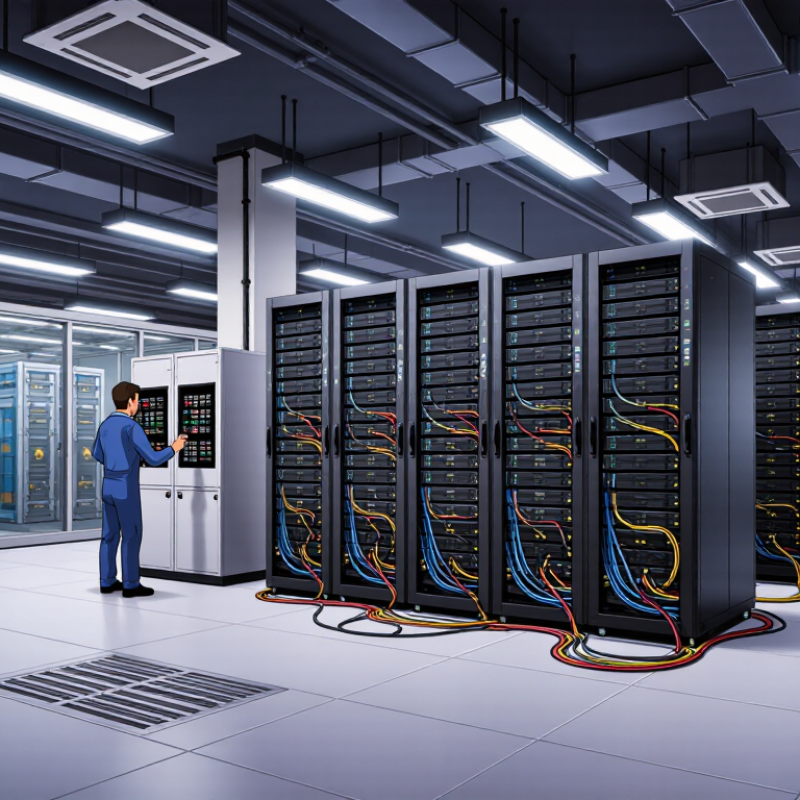
How to Choose the Best Data Center Power Supplier?

Understanding Data Center Power Requirements

Understanding data center power requirements starts with the actual load, not a supplier’s sales forecast. The IEA’s Electricity 2024 report projects global data center electricity consumption could exceed 1,000 TWh by 2026. That growth changes procurement decisions.

A reliable assessment separates critical IT load, cooling, lighting, and future expansion. Measure peak demand, average demand, power usage effectiveness, voltage, and required redundancy. A rack drawing 12 kW today may need 25 kW after hardware upgrades. Select a Power Distribution Unit Data Center solution that supports real-time monitoring, branch-circuit visibility, and safe maintenance. The system should also match local utility limits and generator capacity.

In operational reviews, small assumptions often create large risks. A five-minute startup delay can matter during a transfer event. A crowded panel can expose poor planning. Uptime Institute’s Annual Global Data Center Survey has repeatedly linked power issues and human error with serious outages, while its 2024 findings reported that many incidents still caused substantial financial losses. These reports support a practical rule: verify every specification through testing, not brochures.

Tips: Request twelve months of interval-meter data before signing a contract. Ask suppliers to model 24-hour peaks, seasonal cooling demand, and emergency operation. Require documented factory testing and site acceptance testing. Leave physical and electrical capacity for growth, but do not overbuild blindly. Forecasts can be wrong. That deserves honest review.

Evaluating Supplier Reliability and Service Capacity

How to Choose the Best Data Center Power Supplier?

Evaluating Supplier Reliability and Service Capacity

A data center power supplier must deliver more than equipment. It must support stable operations during ordinary days and unexpected failures. Ask for documented uptime records, maintenance procedures, and tested emergency response plans. Request evidence from comparable facilities, not general promises. Field experience matters here. A supplier that understands load growth can prevent costly redesigns later.

Service capacity deserves equal attention. Check the supplier’s engineering team, regional coverage, spare-parts inventory, and technician response times. A 24-hour hotline sounds useful, but who arrives at the site at 3 a.m.? Review service-level agreements carefully. Confirm escalation steps, reporting duties, and repair targets. Ask whether technicians can support batteries, switchgear, cooling interfaces, and monitoring systems together. Fragmented support can create dangerous delays.

Tips: Visit an operating installation if possible. Speak with facility managers privately. Ask how often planned maintenance caused disruption. Test communication during a simulated fault. Check training certificates and safety records. Also, examine financial stability and subcontractor controls. A supplier may appear capable but rely heavily on outside teams. That is worth questioning. No checklist is perfect. Supplier capacity can change after contract signing, especially during rapid expansion. Schedule regular performance reviews, and record every missed response, delayed part, or unclear handoff. Reliable partnerships are built through measurable service, honest reporting, and visible improvement.

Comparing Power Generation and Distribution Solutions

Choosing the best data center power supplier requires more than comparing electricity prices. Generation and distribution solutions determine how safely and consistently equipment receives power. Review the supplier’s generation mix, reserve capacity, and maintenance records. A facility may need utility power, onsite generation, battery storage, or a coordinated combination. For an Ecc Data Center, this decision affects uptime, cooling performance, and long-term operating costs.

Examine the complete distribution path, from the incoming switchgear to rack-level power. Ask for evidence of testing, protection settings, and fault-isolation procedures. Walk through the design if possible. Look for clearly labeled panels, separated power paths, and realistic maintenance access. Redundant equipment helps, but redundancy can fail when both paths share one overlooked connection. That detail is easy to miss. No comparison is perfect.

Tips: Request load-flow studies and recent test reports. Compare response times for outages, not only advertised availability. Check whether batteries support the required ride-through period. Confirm generator fuel planning and service arrangements. Finally, model future demand, including higher-density racks and expanded cooling. A cheaper system may become expensive after upgrades. Recheck every assumption.

How to Choose the Best Data Center Power Supplier? - Comparing Power Generation and Distribution Solutions
Power Solution Primary Function Typical Electrical Range Typical Efficiency or Availability Characteristic Response or Transfer Time Main Advantages Key Limitations Best-Fit Selection Criteria
Utility Grid Connection Primary source of continuous electrical power for the facility. Usually low-voltage or medium-voltage service; common medium-voltage levels include approximately 3.3–35 kV, depending on the local network. High operating efficiency at the facility level; reliability depends on grid quality and local infrastructure. Not applicable for normal supply; utility restoration may take minutes to hours or longer after a major outage. Low on-site emissions, mature infrastructure, and generally lower operating cost than fuel-based generation. Exposed to utility outages, voltage disturbances, transmission constraints, and demand charges. Choose suppliers that can provide dual utility feeds, clear service-level commitments, outage history, and expansion capacity.
Diesel Generator Set Standby or emergency generation during utility failure. Commonly from several hundred kVA to multiple MVA per unit; low-voltage or medium-voltage output is available. Electrical efficiency commonly about 35–45% at rated load; long-duration operation is possible with fuel logistics. Typically reaches rated output within approximately 10–30 seconds after a start signal, subject to configuration and load conditions. High power density, proven technology, rapid startup, and strong short-term overload capability. Requires fuel storage and testing; produces exhaust emissions, noise, and maintenance requirements. Evaluate fuel autonomy, emissions compliance, black-start capability, load-bank testing, spare parts, and maintenance response time.
Natural-Gas Generator Set Standby, prime, or distributed generation using pipeline or stored gas. Commonly from several hundred kW to multiple MW per unit. Electrical efficiency commonly about 35–45%; emissions can be lower than diesel for some pollutants, depending on the engine and fuel. Typically tens of seconds to reach stable rated output; exact performance depends on engine design and gas pressure. Lower on-site fuel storage requirements, potentially lower particulate emissions, and suitability for longer operating periods where gas supply is reliable. Dependent on gas infrastructure; pipeline pressure or supply interruption can reduce resilience. Verify independent gas supply, pressure stability, dual-fuel options, emissions permits, and fuel availability during regional emergencies.
Fuel Cell Generation Low-emission distributed generation using an electrochemical process. Typically modular systems from tens of kW to several MW. Electrical efficiency often approximately 40–60%, with higher total efficiency when usable heat is recovered. Usually slower than batteries for sudden load changes; commonly paired with UPS systems for instantaneous continuity. Low local noise, compact footprint, and potentially high efficiency at steady load. Higher capital cost, fuel availability requirements, specialized maintenance, and limited supplier/service coverage in some regions. Assess hydrogen or reformate availability, fuel quality, stack life, replacement cost, ramp rate, and service network capability.
Solar Photovoltaic System Supplementary renewable generation that offsets grid consumption. From rooftop systems below 1 MW to utility-scale installations of many MW. Conversion efficiency commonly about 18–25% for modern modules; energy yield depends on solar resource, orientation, and temperature. Output varies with sunlight; it does not normally provide firm backup power without energy storage. Reduces daytime grid demand and operational carbon emissions; has low routine maintenance requirements. Intermittent output, land or roof-area requirements, inverter replacement needs, and limited contribution during nighttime outages. Compare annual solar yield, interconnection limits, roof loading, degradation assumptions, curtailment risk, and integration with storage.
Battery Energy Storage System Stores electrical energy for ride-through, peak shaving, load shifting, and backup support. From hundreds of kW to hundreds of MW; duration commonly ranges from approximately 15 minutes to 4 hours, depending on design. Round-trip efficiency commonly about 80–95%; availability depends on battery management, thermal control, and redundancy. Power electronics can respond in milliseconds, making batteries suitable for bridging the gap before generators start. Fast response, no direct combustion emissions during operation, and flexible use for resilience and demand management. Finite energy duration, degradation over time, thermal-runaway controls, fire-protection requirements, and replacement planning. Review usable energy, power rating, battery chemistry, fire protection, warranty terms, degradation model, and end-of-life strategy.
Static UPS System Provides conditioned, uninterrupted power to critical IT and control loads. Commonly from 10 kVA to several MVA per module; systems can be paralleled for higher capacity. Online systems commonly achieve approximately 94–99% efficiency, depending on operating mode and load level. Typically no-break transfer through power electronics; battery runtime is commonly several minutes unless additional storage is installed. Protects against voltage sags, surges, frequency variation, and short interruptions. Battery replacement, cooling requirements, harmonic management, and efficiency losses at lightly loaded conditions. Compare topology, modularity, bypass reliability, battery autonomy, fault-clearing coordination, scalability, and maintenance bypass design.
Medium-Voltage Switchgear Controls, protects, and isolates medium-voltage incoming and outgoing circuits. Typically above 1 kV and up to approximately 35 kV in many data-center applications. Designed for high operational reliability; losses are generally low but depend on bus rating and equipment configuration. Protection clearing is commonly measured in cycles to hundreds of milliseconds; switching time depends on breaker type and protection settings. Supports multiple utility feeds, generator connection, selective coordination, and safe isolation for maintenance. Requires qualified operation, arc-flash planning, protection coordination, and periodic testing. Check short-circuit rating, arc-resistant construction, relay functions, interlocking, remote operation, metering, and expansion space.
Low-Voltage Switchgear and Switchboards Distributes and protects power downstream of transformers or generators. Typically up to 1,000 V AC, with bus ratings commonly ranging from approximately 800 A to several thousand amperes. High availability depends on redundant sections, selective coordination, maintenance access, and breaker reliability. Breaker operation is typically milliseconds to seconds, depending on protection and switching functions. Flexible feeder arrangement, protection coordination, metering, and integration with automatic transfer systems. Space, heat dissipation, arc-flash exposure, and maintenance requirements increase with fault current and system size. Evaluate fault rating, withstand rating, sectionalization, draw-out breakers, thermal performance, monitoring, and service access.
Automatic Transfer Switch Transfers a load between normal and emergency power sources. Commonly from approximately 30 A to 4,000 A or higher, depending on application. Reliability depends on mechanical or solid-state design, source monitoring, bypass features, and routine testing. Typical transfer time is approximately 50–1,000 milliseconds; open-transition systems briefly disconnect the load. Automates source changeover and supports generator-backed critical loads. Improper settings can cause nuisance transfers; closed-transition designs require careful synchronization and utility approval. Compare transition type, bypass-isolation capability, short-circuit rating, sensing accuracy, test mode, and communication protocols.
Power Distribution Unit and Remote Power Panel Steps down, distributes, monitors, and protects power for IT equipment. Often supplied at 208/120 V or 415/240 V AC; capacity commonly ranges from tens to hundreds of kVA. Efficiency commonly about 95–99% for transformer-based units, depending on load and design. Normally no transfer function; response is governed by upstream UPS and protective devices. Provides branch-circuit monitoring, localized protection, and flexible connection to racks. Can create heat and floor-space demands; poor phase balancing may reduce capacity and increase losses. Assess metering accuracy, branch-circuit density, breaker coordination, neutral capacity, remote monitoring, and future rack growth.
Busway and Rack Power Distribution Distributes power along rows and provides flexible rack-level connection points. Common busway ratings range from approximately 100 A to 1,600 A or more, depending on the system. Low distribution losses when correctly sized; operational flexibility depends on plug-in unit design and monitoring. Connection changes are usually performed during planned work; it is not a substitute for UPS ride-through. Supports rapid rack deployment, high-density loads, modular expansion, and easier reconfiguration than fixed cabling. Requires careful installation, compatibility control, physical clearance, and protection coordination. Compare current rating, short-circuit withstand, tap-off flexibility, monitoring, connector safety, overhead clearance, and scalability.
Note: Electrical ratings, efficiency values, response times, and availability characteristics are typical industry ranges rather than guaranteed specifications. Final selection should be based on local codes, site conditions, load profile, redundancy target, environmental requirements, maintenance capability, and verified supplier test data.

Checking Efficiency, Sustainability, and Compliance Standards

Choosing a data center power supplier requires more than comparing electricity rates. Efficiency appears in measurable details: power usage effectiveness, conversion losses, and response time during demand changes. Ask for recent performance records, not polished promises. A supplier should explain how its equipment performs at partial load, where many facilities waste energy. During a site review, inspect meters, cooling interfaces, backup systems, and maintenance logs.

Sustainability claims need physical evidence. Request the energy mix, renewable procurement method, emissions data, and reporting boundary. A low-carbon contract may look impressive while excluding transmission losses or emergency generation. Check whether the supplier supports battery storage, demand response, and water-conscious cooling operations. These details affect both environmental impact and operating costs. Still, renewable energy is not automatically reliable. Weather, grid congestion, and certificate quality can change the picture.

Compliance should be verified against the laws and standards relevant to your location and workload. Review independent audit reports, incident records, cybersecurity controls, and business continuity procedures. Ask who owns the data. Ask who signs corrective actions. A serious supplier will provide traceable evidence and clear escalation contacts. Test one uncomfortable scenario: a prolonged grid interruption during peak computing demand. The answer may reveal gaps hidden by excellent normal-day efficiency. No supplier is flawless. That is precisely why documented controls, transparent limits, and regular reassessment matter.

Reviewing Pricing Models, Contracts, and Total Ownership Costs

How to Choose the Best Data Center Power Supplier?

A Big Data Center needs more than a low advertised electricity rate. During a procurement review, compare energy charges, demand fees, transmission costs, taxes, and service adjustments. A supplier offering 0.06 dollars per kilowatt-hour may still cost more after peak-demand penalties. Request twelve months of sample invoices, not just a sales estimate. Small billing details matter.

Contract terms deserve equal attention. Check the initial period, renewal rules, price-escalation clauses, and early termination fees. Confirm how the supplier handles power interruptions, voltage issues, and emergency communication. Ask whether renewable energy certificates are included or priced separately. Technical guarantees should appear in measurable service-level language. Vague promises create expensive disagreements.

Total ownership cost should include metering upgrades, backup coordination, compliance reporting, and staff time. Model several operating conditions, including a hot month with cooling loads near capacity. Our first comparison was too narrow; it focused on unit price and missed a substantial demand charge. That mistake changed the evaluation. Build a five-year model with conservative assumptions, then test a worse scenario. Leave room for uncertainty. A reliable supplier should explain its calculations clearly and provide accessible usage data. Contract transparency is useful, but regular invoice audits remain necessary.

How to Choose the Best Data Center Power Supplier?

Five-year total ownership cost comparison by power procurement model. The scenario assumes a 100 MW data center operating at 90% utilization, equivalent to approximately 788,400 MWh of annual electricity consumption. Costs include energy, demand charges, renewable compliance, balancing, and contract-related fees.

Fixed-price contracts provide stronger budget certainty, while indexed wholesale agreements may offer the lowest cost when market prices remain favorable. A complete supplier review should also assess term flexibility, credit requirements, renewable coverage, balancing responsibility, and termination costs.

Assessing Scalability, Maintenance, and Emergency Support

Choosing a power supplier for a Cdu Data Center requires more than comparing energy rates. Start with future capacity. Ask how the supplier handles new racks, higher-density servers, and sudden expansion. A reliable partner should model three-year and five-year load growth.

Scalability needs evidence. Request load studies, redundancy diagrams, and recent capacity test results. Confirm whether power paths are independent and whether UPS systems support maintenance without downtime. Small details matter. A crowded electrical room can reveal weak planning. Flexible contracts also help when demand changes faster than expected.

Maintenance practices deserve equal attention. Check scheduled service intervals, technician qualifications, spare-part availability, and maintenance records. The supplier should explain how faults are detected before alarms become outages. Emergency support must be measurable. Ask about response times, onsite staffing, escalation procedures, and generator fuel arrangements. Request a recent incident report, with sensitive details removed. This shows how the team performed under pressure, not just how it advertises. Conduct an emergency drill, even if it feels inconvenient. A response plan can look excellent on paper and fail at 2 a.m. No supplier is perfect. The better choice is the one that admits weak points and improves them.

Selecting the Supplier That Best Fits Your Data Center Strategy

How to Choose the Best Data Center Power Supplier?

Selecting a power supplier should begin with your data center strategy, not a price sheet. Define expected load, expansion dates, redundancy targets, and sustainability requirements before comparing contracts. The International Energy Agency reported that data centers consumed about 460 terawatt-hours of electricity in 2022. Demand could more than double by 2026. Your supplier must support growth without creating operational surprises.

Look for proven experience with critical facilities, transparent outage reporting, and clear restoration procedures. Ask how the supplier manages voltage stability, fuel availability, grid interruptions, and scheduled maintenance. The Uptime Institute’s 2023 outage analysis found that 54% of serious outages caused more than $100,000 in direct and indirect costs. Reliability is measurable. Request historical performance data, service-level commitments, and escalation contacts with defined response times.

Our first shortlist was too narrow. We focused heavily on energy rates and missed contract flexibility. That was a mistake. A lower tariff may become expensive when demand charges, backup requirements, or delayed capacity upgrades appear. Review interval-metering options, renewable-energy evidence, carbon accounting, and termination clauses with technical and financial teams. Test the supplier through a documented outage exercise before signing. Ask uncomfortable questions. If answers remain vague, the fit is probably weak.

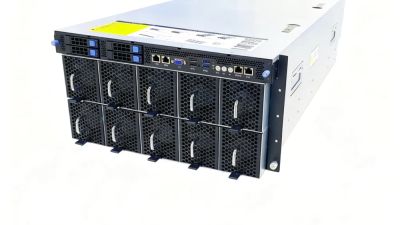
Crystal Server 5U GPU Chassis: High-Performance AI Infrastructure with 8/10 GPU and 4+1 PSU Support

The Crystal Server 5U GPU Chassis is built for demanding AI training, deep learning, high-performance computing, and data center workloads. Its spacious 5U architecture supports configurations with up to eight or ten high-performance GPUs, enabling substantial parallel processing for complex models, scientific simulations, and large-scale data analysis. Flexible PCIe expansion provides room for specialized accelerators, networking cards, and other enterprise components, while high-speed storage support helps maintain efficient data access during intensive operations.

Powered by advanced server-grade processors, the platform delivers dependable computing performance for continuous workloads. Its 4+1 redundant power supply design improves availability by maintaining system operation if a power module requires service or replacement. A carefully engineered cooling structure helps manage heat generated by multiple GPUs and processors, supporting stable performance under sustained load. The chassis also accommodates streamlined integration into professional infrastructure, offering the expansion capacity, storage flexibility, and operational resilience required for modern AI and HPC environments.

FAQS

What should a data center compare besides electricity prices?

Compare generation, distribution, reserve capacity, and maintenance records. Look beyond rates. Power quality affects uptime, cooling, and operating costs.

How can a facility check its power distribution design?

Review the path from incoming switchgear to rack-level outlets. Request load-flow studies, protection settings, and recent test reports. Look for labeled panels, separated paths, and practical maintenance access.

Why can redundant power systems still fail?

Both power paths may share one overlooked connection. That hidden link can create a single failure point. Redundancy helps, but it is not magic.

What should battery and generator capabilities include?

Confirm the battery ride-through period matches the required outage response. Check generator fuel planning, service arrangements, and testing procedures. Emergency details matter.

How should a data center evaluate pricing models?

Request twelve months of sample invoices. Compare energy charges, demand fees, transmission costs, taxes, and service adjustments. A low unit rate may hide costly peak-demand charges.

Which contract terms require close review?

Check the initial term, renewal rules, price increases, and termination fees. Confirm procedures for interruptions, voltage problems, and emergency communication. Technical guarantees should use measurable service levels.

How can total ownership cost be modeled?

Include metering upgrades, backup coordination, compliance reporting, and staff time. Build a five-year model with conservative assumptions. Test a hot month with cooling near capacity. Our earlier comparison missed a demand charge.

How should a supplier prove scalability?

Request three-year and five-year load forecasts. Review redundancy diagrams and recent capacity test results. Ask how new racks and higher-density servers will affect power demand.

What maintenance evidence should a supplier provide?

Check service intervals, technician qualifications, spare parts, and maintenance records. Ask how faults are detected before alarms become outages. Records reveal more than polished promises.

How can emergency support be tested realistically?

Ask for response times, onsite staffing, escalation steps, and fuel arrangements. Request an incident report with sensitive details removed. Run an emergency drill. Paper plans can fail at 2 a.m.

Conclusion

Choosing the right Data Center Power supplier requires a careful review of both current needs and long-term operational goals. Start by assessing the facility’s power demand, redundancy requirements, critical loads, and expected growth. Then evaluate each supplier’s reliability, technical expertise, service coverage, response times, and ability to provide dependable generation and distribution solutions. Efficiency, sustainability, emissions management, safety practices, and compliance with applicable standards should also be considered to support responsible and resilient operations.

Cost evaluation should go beyond initial pricing. Compare contract terms, energy rates, maintenance responsibilities, equipment lifecycle expenses, and potential downtime risks to understand total ownership costs. A strong supplier should offer flexible scalability, preventive maintenance, monitoring capabilities, replacement planning, and rapid emergency support. Ultimately, the best choice is the supplier that combines stable performance, transparent commercial terms, efficient technology, responsive service, and the capacity to grow alongside the data center’s evolving strategy.


Amelia

Amelia

Amelia is a dedicated marketing professional based in Shenzhen, China, with a strong expertise in hardware solutions. As part of ZOZT, she plays a crucial role in bridging the gap between cutting-edge technology and customers' needs. Amelia is well-versed in the intricacies of rack servers,......
Previous China Top 10 Data Center Server Manufacturers?